
Introduction
This online toolkit is your guide to widely share and promote the benefits of extra-curricular volunteering opportunities of student engagement & civic participation.
Here you’ll find practical resources that work and that you can use for both re-thinking strategies or taking immediate action in relation to facilitating student engagement & civic participation.
Welcome to the EngageAll project toolkit.
This toolkit has been designed in the form of an Instagram account to be as interactive as possible.
Feel free to browse the page and click on the tabs that interest you. You can navigate this webpage in any order that you would like.
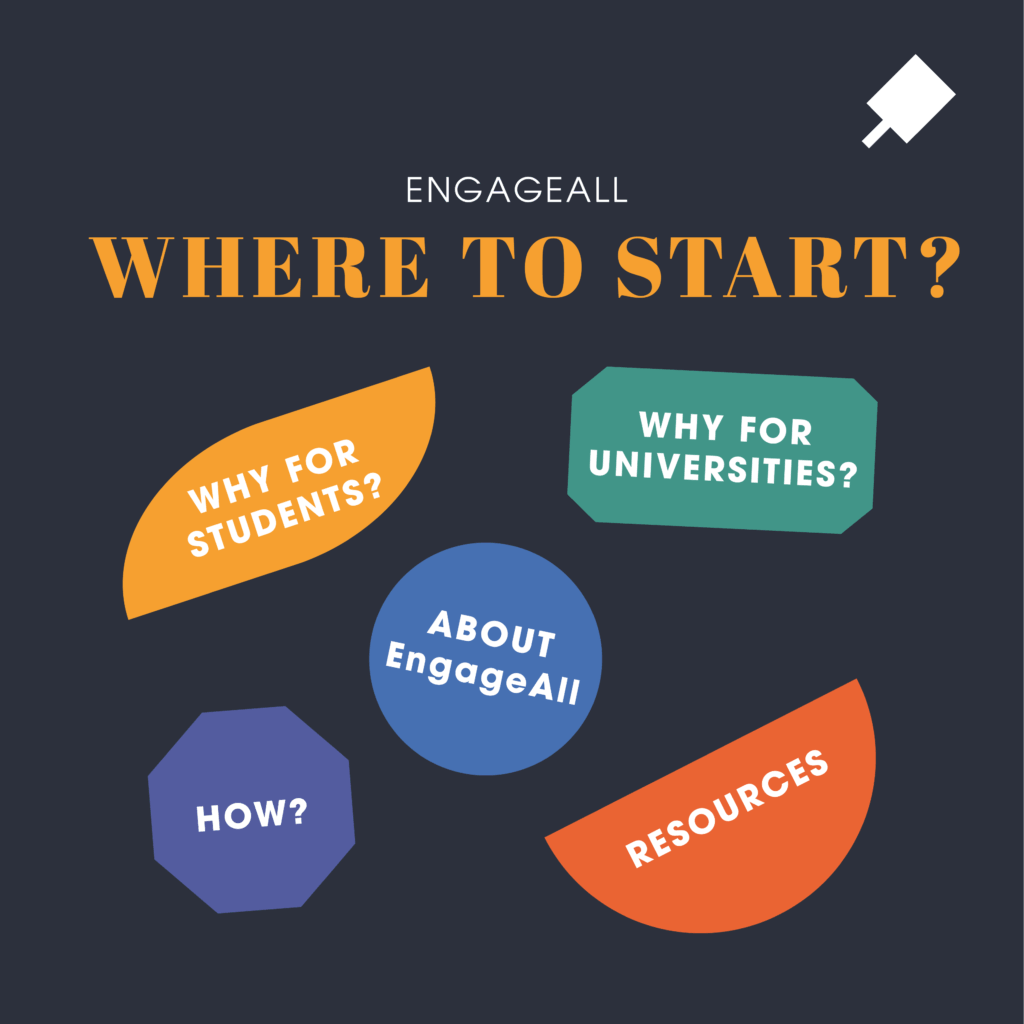
To make your user experience easier, we have created this “Where to start” section to guide you through the different segments:
In the spotlight:
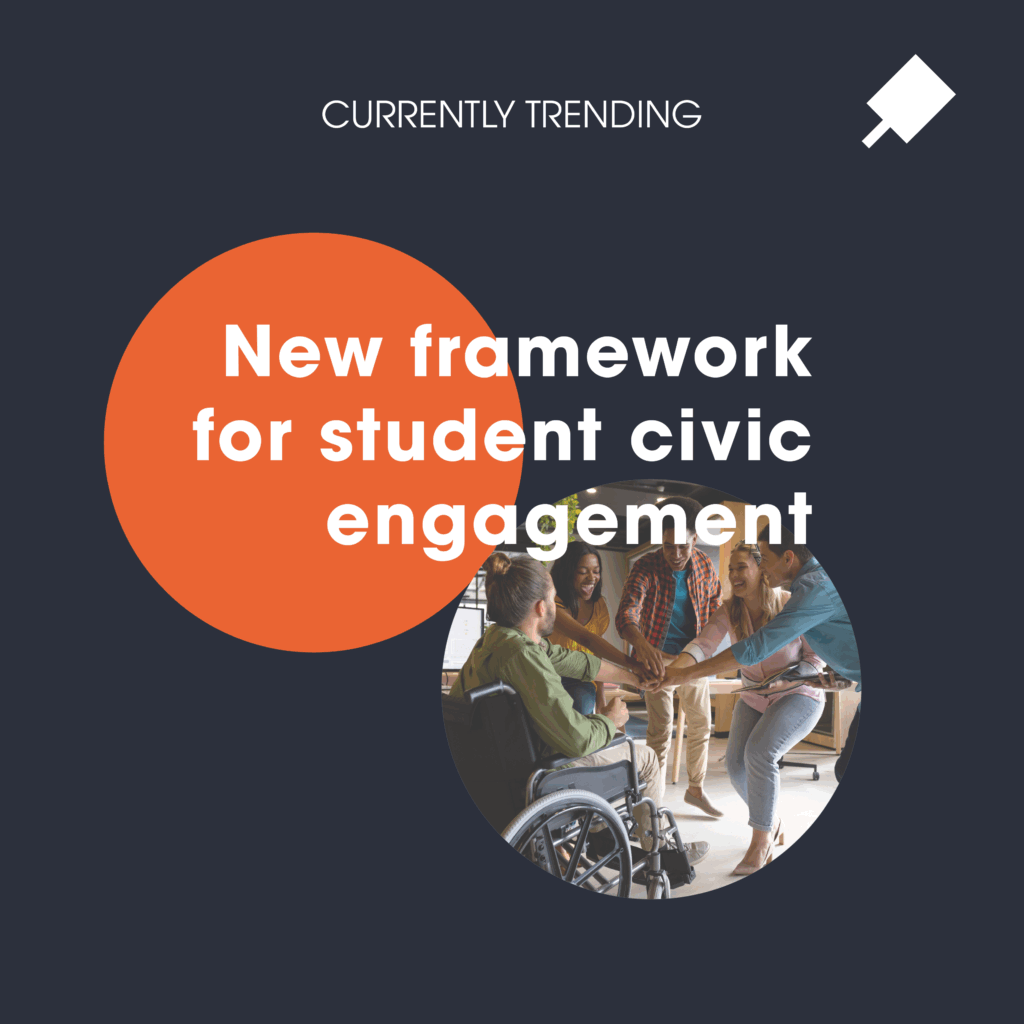
New framework measures student civic engagement
We hosted our second EngageAll webinar on 6 October 2025. In this session, we introduced a new framework for measuring civic engagement in higher education.
Researchers from DHBW Karlsruhe introduced the EngageAll Framework, with expert reflections from THEA and Civil Society Europe. Participants discussed how to apply the framework in their own institutions.
The framework offers practical tools for universities to assess and enhance student civic competences.
Was is student engagement? Why does it matter?
“Engagement and more specifically student engagement, refers to the active participation, commitment, and investment of students in their educational journey, both within and beyond the classroom. It encompasses academic, co-curricular, and civic activities that foster learning, personal growth, and community impact. Engagement may take multiple forms, including representation in decision-making, service learning, civic learning, activism, and advocacy, and involves students applying and developing knowledge, skills, and values in authentic, youth-led ways that generate meaningful policy, social, and personal outcomes.”
When we look specifically at student civic engagement, we can define that as follows:
Student civic engagement focuses on collaborations between students and organizations, within and outside the educational (higher) context with the aim of supporting others and serving the community. It facilitates the development of civic responsibility and democratic values – human rights, respect, social inclusion.
Benefits of civic engagement/volunteering for students:
1. Sense of belonging and community life
Engaging in student life, volunteering, or civic activities offers far more than just a line on a CV. Participation fosters personal growth, skills development, and a deeper connection with your community. Here’s what students can gain:
Benefits of civic engagement/volunteering for students:
2. New skills and key competencies
What do students expect from their institution?
How can student organisations support engagement?
Student organisations play a central role in creating environments where students feel empowered to participate actively in their communities and institutions. They act as bridges between students, universities, and society, offering both opportunities and support structures that make engagement possible and meaningful. Here are some key ways student organisations can foster engagement:

Benefits for Universities
(2) Active student engagement promotes intercultural communication, inclusive practices, cultural sensitivity, (inter)cultural competence, and citizenship competence, all of which help foster a stronger democratic university environment.
(3) Students engagement can strengthen the university’s role within the local ecosystem, supporting its mission of the university as a socially responsible and civically engaged institution.
How to support student engagement? Strategies and keys for PHE institutions
Universities, and in particular Professional Higher Education Institutions (PHEs) usually engage with a diverse body of students, including non-traditional students, whose background and context may differ significantly. Their role is to actively recognise and consider their diverse student body in the decision-making process to ensure that the institutional policies and practices are inclusive and equitable for all students. This includes:
How to support student engagement? Strategies and keys for PHE institutions
Universities, and in particular Professional Higher Education Institutions (PHEs) usually engage with a diverse body of students, including non-traditional students, whose background and context may differ significantly. Their role is to actively recognise and consider their diverse student body in the decision-making process to ensure that the institutional policies and practices are inclusive and equitable for all students. This includes:
Publicly celebrating and acknowledging civic engagement – such as highlighting the achievements of engaged students on social media – helps showcase the value of civic engagement and individual contributions in the community.
Use certificates, micro-credentials, and digital badges tied to learning outcomes to formally recognise civic engagement.
How to support student engagement? Strategies and keys for PHE institutions
Universities, and in particular Professional Higher Education Institutions (PHEs) usually engage with a diverse body of students, including non-traditional students, whose background and context may differ significantly. Their role is to actively recognise and consider their diverse student body in the decision-making process to ensure that the institutional policies and practices are inclusive and equitable for all students. This includes:
Where possible, include civic engagement as a part of curriculum, either as optional or voluntary activities, while offering guidance and facilitating university endorsed volunteering and engagement opportunities.
How to support student engagement? Strategies and keys for PHE institutions
Universities, and in particular Professional Higher Education Institutions (PHEs) usually engage with a diverse body of students, including non-traditional students, whose background and context may differ significantly. Their role is to actively recognise and consider their diverse student body in the decision-making process to ensure that the institutional policies and practices are inclusive and equitable for all students. This includes:
How to support student engagement? Strategies and keys for PHE institutions
Universities, and in particular Professional Higher Education Institutions (PHEs) usually engage with a diverse body of students, including non-traditional students, whose background and context may differ significantly. Their role is to actively recognise and consider their diverse student body in the decision-making process to ensure that the institutional policies and practices are inclusive and equitable for all students. This includes:
Educate students on quality volunteering and how to distinguish between genuine volunteering opportunities and exploitative roles.
Facilitate internships and real-world research opportunities that integrate civic engagement, in collaboration with community organisations that for example work with migrants, refugees, or the elderly, to provide students with impactful, socially relevant experiences.
How to support student engagement? Strategies and keys for PHE institutions
Universities, and in particular Professional Higher Education Institutions (PHEs) usually engage with a diverse body of students, including non-traditional students, whose background and context may differ significantly. Their role is to actively recognise and consider their diverse student body in the decision-making process to ensure that the institutional policies and practices are inclusive and equitable for all students. This includes:
How to support student engagement? Strategies and keys for PHE institutions
Universities, and in particular Professional Higher Education Institutions (PHEs) usually engage with a diverse body of students, including non-traditional students, whose background and context may differ significantly. Their role is to actively recognise and consider their diverse student body in the decision-making process to ensure that the institutional policies and practices are inclusive and equitable for all students. This includes:
Implement and safe-guard a learner-centered approach that include and support students from diverse, non-traditional and disadvantaged backgrounds, making civic engagement accessible for all.
How to support student engagement? Strategies and keys for PHE institutions
Universities, and in particular Professional Higher Education Institutions (PHEs) usually engage with a diverse body of students, including non-traditional students, whose background and context may differ significantly. Their role is to actively recognise and consider their diverse student body in the decision-making process to ensure that the institutional policies and practices are inclusive and equitable for all students. This includes:
Recognising and valuing the full diversity of the student body—including adult learners, those who are employed, and students with family responsibilities.
Ensure meaningful and genuine involvement of a diverse student body in university decision-making processes, so students help shape policy and practice.
How to support student engagement? Strategies and keys for PHE institutions
Universities, and in particular Professional Higher Education Institutions (PHEs) usually engage with a diverse body of students, including non-traditional students, whose background and context may differ significantly. Their role is to actively recognise and consider their diverse student body in the decision-making process to ensure that the institutional policies and practices are inclusive and equitable for all students. This includes:
Offer targeted support and guidance for non-traditional students, including migrants, adult learners, working students, and those with family responsibilities.
Invest in guiding or mentoring mechanisms around balancing academic, personal, and civic commitments.
Recognize the intensive timetable of many PHE students, and create flexible, accessible engagement opportunities that do not penalize students for their time commitments

Presentation of the project
The EU co-funded EngageAll project addresses the crucial role of Professional Higher Education (PHE) institutions in fostering active citizenship and highlights the wide-ranging benefits of student involvement beyond academic study. This includes participation in institutional initiatives, local community projects, and activities addressing broader societal challenges. With a focus on the unique and diverse student body within PHE, EngageAll pays specific attention to challenges students face in balancing academic commitments with extracurricular activities.
The project started in September 2024 and will last until April 2027.
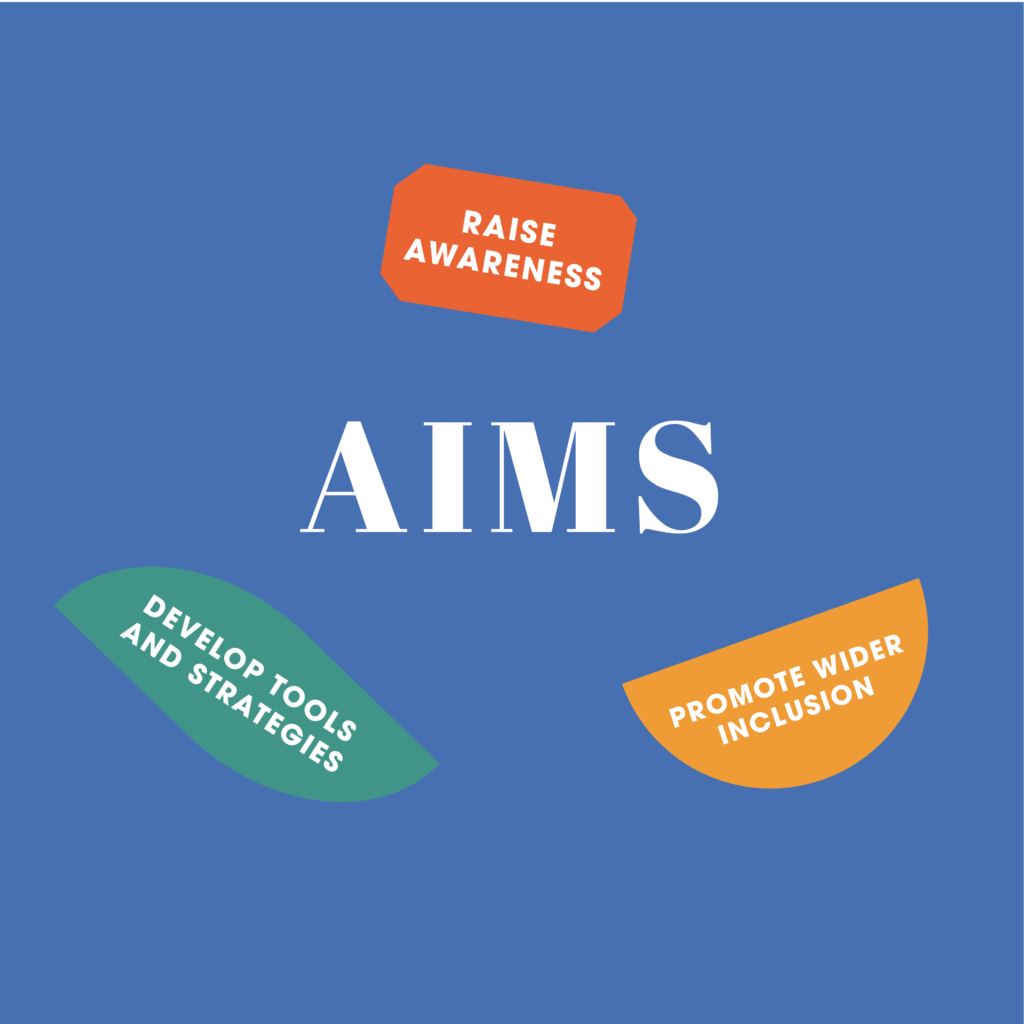
EngageAll aims to:
EngageAll empowers Professional Higher Education (PHE) students to actively participate in student engagement and civic activities, regardless of background, for a richer learning experience, enhanced employability, and a stronger link between education and society. By making these opportunities more visible, accessible, and valued, EngageAll fosters the development of essential skills, civic values, and democratic engagement, building a bridge between higher education and civil society.

EngageAll Consortium
The EngageAll consortium brings together eight partners from five European countries, blending the voices of students, universities, and innovators. Led by Duale Hochschule Baden-Württemberg – DHBW (Germany), the team includes the European Students’ Union – ESU (Belgium), European Association for the Applied Sciences in Higher Education – EURASHE (Belgium), Mondragon University – MU (Spain), UC Leuven-Limburg – UCL (Belgium), The Malta College of Arts, Science and Technology – MCAST (Malta) the Knowledge Innovation Centre – KIC (Malta), and the Institute for the Development of Education – IDE (Croatia). Together, they combine expertise in higher education, policy, and innovation to strengthen civic engagement and student-centred learning across Europe.

EngageAll Resources
The EngageAll project addresses the role of professional higher-education institutions in fostering inclusive student civic engagement beyond academic study, with particular focus on under-represented students. It aims to raise awareness of student engagement, promote inclusion, and develop tools and strategies for institutions to support civic participation and enhance students’ competencies and employability.

External resources

To ensure that service-learning projects have a positive and lasting impact on all stakeholders: the community, the higher education institution, and the student, they should be evaluated regularly and thoughtfully. Ongoing evaluation helps identify what’s working well, what can be improved, and how the experience is contributing to shared goals. To support this process, we’ve provided a selection of tools and frameworks to help you plan and conduct evaluations. Please note that even though some resources refer to e-Service-Learning, they are also applicable in the face-to-face context
DESCRIPTION OF THE RESOURCE: Introduction and guidelines for the evaluation of Service-Learning community impact
DESCRIPTION OF THE RESOURCE: A Service-Learning impact measurement tool
DESCRIPTION OF THE RESOURCE: A Service-Learning projects quality assessment tool

Service-learning projects should be designed to respond to the real needs of the community. To ensure their relevance and impact, higher education institutions must actively collaborate with community partners, such as NGOs, local organisations and institutions that are directly engaged with the community’s most pressing challenges. Building and sustaining these partnerships requires mutual trust, clear communication, and shared goals. To support you in establishing collaborations with community partners, co-designing projects, and implementing them effectively, here is a a useful resource (please note that even though it refers to e-Service-Learning, it is also applicable in the face-to-face context).
DESCRIPTION OF THE RESOURCE: Manual for community partners involved or planning to be involved in the e-Service-Learning. However, this manual is also applicable in a traditional face-to-face setting.
More resources can be found in our Resource Library.

Capacity building is the first step to supporting the effective implementation of service-learning across the higher education institution. When teaching staff are equipped with the right knowledge, tools, and pedagogical strategies, they are better prepared to design relevant service-learning experiences and guide students through the process. Here is a helpful handbook (please note that even though it refers to e-Service-Learning, it is also applicable in the face-to-face context).
DESCRIPTION OF THE RESOURCE: A train-the-traniner set of guidelines for introducing e-Service-Learning. However, these guidelines are also applicable in a traditional face-to-face setting.
More resources can be found in our Resource Library.

Institutionalising service-learning is essential for its successful and sustainable implementation, moving beyond isolated efforts driven solely by individual enthusiasm. When support is provided at the institutional level, it becomes much easier to embed service-learning systematically into the curricula. However, this process must also take into account some contextual factors, such as the characteristics of the national higher education system and existing institutional policies and frameworks. To help you navigate these complexities, here are guidelines that can support institutional adoption and long-term implementation.
DESCRIPTION OF THE RESOURCE: Guidelines for institutionalisation of service-learning based on research
More resources can be found in our Resource Library.

Assessment is a key element of service-learning, particularly because, according to the EASLHE definition, the learning achieved through this methodology must be formally recognised through ECTS credits. However, this stage can be particularly sensitive, as traditional assessment methods often do not fully capture students’ learning in a service-learning context. To support you in developing fair assessment strategies, here is a set of tools and examples to help you plan and implement appropriate assessment methods.
DESCRIPTION OF THE RESOURCE: Guidelines for trainers and universities for adopting the methodology and tools
More resources can be found in our Resource Library.

Reflection is a crucial component of the service-learning process, as it enables students to connect their community service experiences with the learning outcomes of the course. Reflection can take many forms: written, oral, creative, or digital, depending on the goals of the service-learning project, the way it has been integrated into the curriculum and your students’ needs. To support the design of meaningful reflection activities, here is a useful template that can help structure this important part of the Service-Learning experience.
DESCRIPTION OF THE RESOURCE: A Service-Learning project reflection template
More tools and templates can be found in our Resource Library.

Once everything is planned and the service-learning elements are integrated into your curriculum, students should be thoroughly informed about each step of the process and the expectations they are expected to meet. After addressing any questions or concerns, it’s time for the community partners to take an active role in the implementation. At this stage, clear and consistent communication is essential, along with careful documentation of the students’ activities, progress, and contributions. To find inspiration check out the projects and practices showcased by the European Association for Service Learning in Higher Education (EASLHE):
DESCRIPTION OF THE RESOURCES: An overview of EASLHE’s (European Association for Service Learning in Higher Education) projects, with a map-based visualisation tool.
More resources, such as such as journalling tool is available to help students regularly reflect on their experiences and learning while the community service is in progress can be found in our Resource Library.

If you want to implement the service-learning methodology in your teaching practice, it’s important to consider your institutional context, the learning outcomes outlined in your curriculum, your students’ aspirations, and the needs of your community. To support you in this process, here is a useful resource that will help you understand the basic principles of service-learning, identify key stakeholders, and design meaningful, impactful experiences for both students and the community.
DESCRIPTION OF THE RESOURCE: A guide for embedding Service-Learning elements into the curriculum and recommendations for higher education institutions
More resources, such as such as guidelines, handbooks, and templates can be found in our Resource Library