
Service-learning in higher education is an experiential educational pedagogy in which students engage in community service, reflect critically on this experience, and learn from it personally, socially and academically. The activities address human, social and environmental needs from the perspective of social justice and sustainable development, and aim at enriching learning in higher education, fostering civic responsibility and strengthening communities. Service-learning is always recognised with ECTS credits. It brings together students, academics and the community whereby all become teaching resources, problem solvers and partners. In addition to enhancing academic and real world learning, the overall purpose is to instil in students a sense of civic engagement and responsibility and work towards positive social change within society. (European Association for Service-Learning in Higher Education, 2020)
More about Service-Learning can be found in Service-Learning guidelines
Road A: For academics and teaching staff
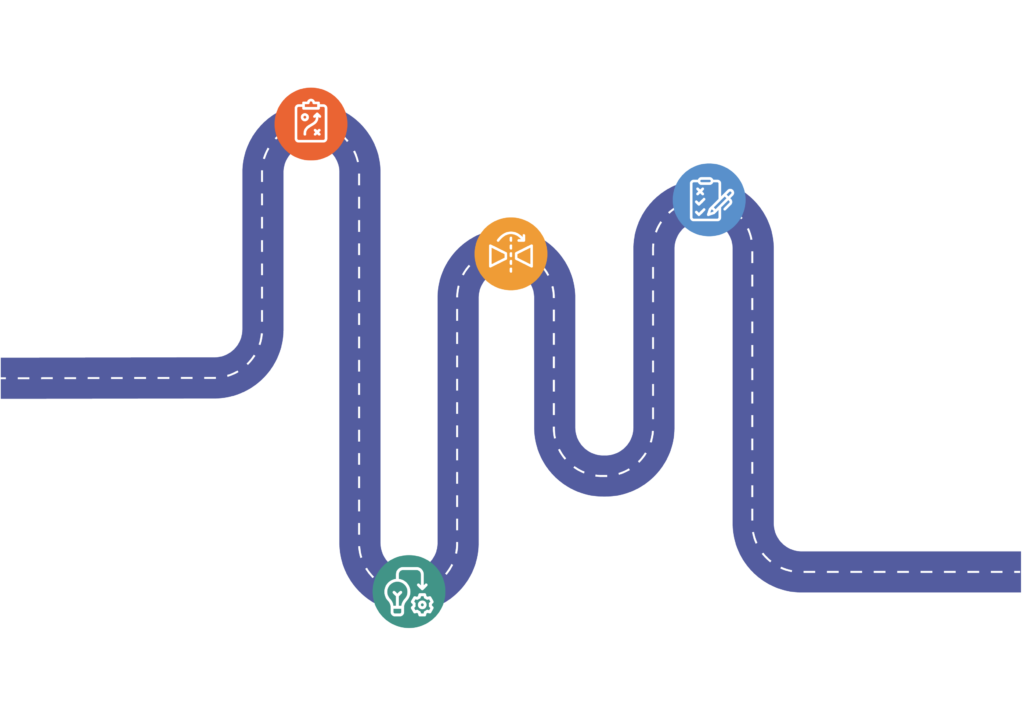
If you want to implement the service-learning methodology in your teaching practice, it’s important to consider your institutional context, the learning outcomes outlined in your curriculum, your students’ aspirations, and the needs of your community. To support you in this process, here is a useful resource that will help you understand the basic principles of service-learning, identify key stakeholders, and design meaningful, impactful experiences for both students and the community.
DESCRIPTION OF THE RESOURCE: A guide for embedding Service-Learning elements into the curriculum and recommendations for higher education institutions
More resources, such as such as guidelines, handbooks, and templates can be found in our Resource Library
Once everything is planned and the service-learning elements are integrated into your curriculum, students should be thoroughly informed about each step of the process and the expectations they are expected to meet. After addressing any questions or concerns, it’s time for the community partners to take an active role in the implementation. At this stage, clear and consistent communication is essential, along with careful documentation of the students’ activities, progress, and contributions. To find inspiration check out the projects and practices showcased by the European Association for Service Learning in Higher Education (EASLHE):
DESCRIPTION OF THE RESOURCES: An overview of EASLHE’s (European Association for Service Learning in Higher Education) projects, with a map-based visualisation tool.
More resources, such as such as journalling tool is available to help students regularly reflect on their experiences and learning while the community service is in progress can be found in our Resource Library.
DESCRIPTION OF THE RESOURCE: A guide for embedding Service-Learning elements into the curriculum and recommendations for higher education institutions
More resources, such as such as guidelines, handbooks, and templates can be found in our Resource Library
Reflection is a crucial component of the service-learning process, as it enables students to connect their community service experiences with the learning outcomes of the course. Reflection can take many forms: written, oral, creative, or digital, depending on the goals of the service-learning project, the way it has been integrated into the curriculum and your students’ needs. To support the design of meaningful reflection activities, here is a useful template that can help structure this important part of the Service-Learning experience.
DESCRIPTION OF THE RESOURCE: A Service-Learning project reflection template
More tools and templates can be found in our Resource Library.
Assessment is a key element of service-learning, particularly because, according to the EASLHE definition, the learning achieved through this methodology must be formally recognised through ECTS credits. However, this stage can be particularly sensitive, as traditional assessment methods often do not fully capture students’ learning in a service-learning context. To support you in developing fair assessment strategies, here is a set of tools and examples to help you plan and implement appropriate assessment methods.
DESCRIPTION OF THE RESOURCE: Guidelines for trainers and universities for adopting the methodology and tools
More resources can be found in our Resource Library.
Road I: For higher education institutions
Institutionalising service-learning is essential for its successful and sustainable implementation, moving beyond isolated efforts driven solely by individual enthusiasm. When support is provided at the institutional level, it becomes much easier to embed service-learning systematically into the curricula. However, this process must also take into account some contextual factors, such as the characteristics of the national higher education system and existing institutional policies and frameworks. To help you navigate these complexities, here are guidelines that can support institutional adoption and long-term implementation.
DESCRIPTION OF THE RESOURCE: Guidelines for institutionalisation of service-learning based on research
More resources can be found in our Resource Library.
Capacity building is the first step to supporting the effective implementation of service-learning across the higher education institution. When teaching staff are equipped with the right knowledge, tools, and pedagogical strategies, they are better prepared to design relevant service-learning experiences and guide students through the process. Here is a helpful handbook (please note that even though it refers to e-Service-Learning, it is also applicable in the face-to-face context).
DESCRIPTION OF THE RESOURCE: A train-the-traniner set of guidelines for introducing e-Service-Learning. However, these guidelines are also applicable in a traditional face-to-face setting.
More resources can be found in our Resource Library.
Reflection is a crucial component of the service-learning process, as it enables students to connect their community service experiences with the learning outcomes of the course. Reflection can take many forms: written, oral, creative, or digital, depending on the goals of the service-learning project, the way it has been integrated into the curriculum and your students’ needs. To support the design of meaningful reflection activities, here is a useful template that can help structure this important part of the Service-Learning experience.
DESCRIPTION OF THE RESOURCE: A Service-Learning project reflection template
More tools and templates can be found in our Resource Library.
To ensure that service-learning projects have a positive and lasting impact on all stakeholders: the community, the higher education institution, and the student, they should be evaluated regularly and thoughtfully. Ongoing evaluation helps identify what’s working well, what can be improved, and how the experience is contributing to shared goals. To support this process, we’ve provided a selection of tools and frameworks to help you plan and conduct evaluations. Please note that even though some resources refer to e-Service-Learning, they are also applicable in the face-to-face context
DESCRIPTION OF THE RESOURCE: Introduction and guidelines for the evaluation of Service-Learning community impact
DESCRIPTION OF THE RESOURCE: A Service-Learning impact measurement tool
DESCRIPTION OF THE RESOURCE: A Service-Learning projects quality assessment tool

To ensure that service-learning projects have a positive and lasting impact on all stakeholders: the community, the higher education institution, and the student, they should be evaluated regularly and thoughtfully. Ongoing evaluation helps identify what’s working well, what can be improved, and how the experience is contributing to shared goals. To support this process, we’ve provided a selection of tools and frameworks to help you plan and conduct evaluations. Please note that even though some resources refer to e-Service-Learning, they are also applicable in the face-to-face context
DESCRIPTION OF THE RESOURCE: Introduction and guidelines for the evaluation of Service-Learning community impact
DESCRIPTION OF THE RESOURCE: A Service-Learning impact measurement tool
DESCRIPTION OF THE RESOURCE: A Service-Learning projects quality assessment tool

Service-learning projects should be designed to respond to the real needs of the community. To ensure their relevance and impact, higher education institutions must actively collaborate with community partners, such as NGOs, local organisations and institutions that are directly engaged with the community’s most pressing challenges. Building and sustaining these partnerships requires mutual trust, clear communication, and shared goals. To support you in establishing collaborations with community partners, co-designing projects, and implementing them effectively, here is a a useful resource (please note that even though it refers to e-Service-Learning, it is also applicable in the face-to-face context).
DESCRIPTION OF THE RESOURCE: Manual for community partners involved or planning to be involved in the e-Service-Learning. However, this manual is also applicable in a traditional face-to-face setting.
More resources can be found in our Resource Library.

Capacity building is the first step to supporting the effective implementation of service-learning across the higher education institution. When teaching staff are equipped with the right knowledge, tools, and pedagogical strategies, they are better prepared to design relevant service-learning experiences and guide students through the process. Here is a helpful handbook (please note that even though it refers to e-Service-Learning, it is also applicable in the face-to-face context).
DESCRIPTION OF THE RESOURCE: A train-the-traniner set of guidelines for introducing e-Service-Learning. However, these guidelines are also applicable in a traditional face-to-face setting.
More resources can be found in our Resource Library.

Institutionalising service-learning is essential for its successful and sustainable implementation, moving beyond isolated efforts driven solely by individual enthusiasm. When support is provided at the institutional level, it becomes much easier to embed service-learning systematically into the curricula. However, this process must also take into account some contextual factors, such as the characteristics of the national higher education system and existing institutional policies and frameworks. To help you navigate these complexities, here are guidelines that can support institutional adoption and long-term implementation.
DESCRIPTION OF THE RESOURCE: Guidelines for institutionalisation of service-learning based on research
More resources can be found in our Resource Library.

Assessment is a key element of service-learning, particularly because, according to the EASLHE definition, the learning achieved through this methodology must be formally recognised through ECTS credits. However, this stage can be particularly sensitive, as traditional assessment methods often do not fully capture students’ learning in a service-learning context. To support you in developing fair assessment strategies, here is a set of tools and examples to help you plan and implement appropriate assessment methods.
DESCRIPTION OF THE RESOURCE: Guidelines for trainers and universities for adopting the methodology and tools
More resources can be found in our Resource Library.

Reflection is a crucial component of the service-learning process, as it enables students to connect their community service experiences with the learning outcomes of the course. Reflection can take many forms: written, oral, creative, or digital, depending on the goals of the service-learning project, the way it has been integrated into the curriculum and your students’ needs. To support the design of meaningful reflection activities, here is a useful template that can help structure this important part of the Service-Learning experience.
DESCRIPTION OF THE RESOURCE: A Service-Learning project reflection template
More tools and templates can be found in our Resource Library.

Once everything is planned and the service-learning elements are integrated into your curriculum, students should be thoroughly informed about each step of the process and the expectations they are expected to meet. After addressing any questions or concerns, it’s time for the community partners to take an active role in the implementation. At this stage, clear and consistent communication is essential, along with careful documentation of the students’ activities, progress, and contributions. To find inspiration check out the projects and practices showcased by the European Association for Service Learning in Higher Education (EASLHE):
DESCRIPTION OF THE RESOURCES: An overview of EASLHE’s (European Association for Service Learning in Higher Education) projects, with a map-based visualisation tool.
More resources, such as such as journalling tool is available to help students regularly reflect on their experiences and learning while the community service is in progress can be found in our Resource Library.

If you want to implement the service-learning methodology in your teaching practice, it’s important to consider your institutional context, the learning outcomes outlined in your curriculum, your students’ aspirations, and the needs of your community. To support you in this process, here is a useful resource that will help you understand the basic principles of service-learning, identify key stakeholders, and design meaningful, impactful experiences for both students and the community.
DESCRIPTION OF THE RESOURCE: A guide for embedding Service-Learning elements into the curriculum and recommendations for higher education institutions
More resources, such as such as guidelines, handbooks, and templates can be found in our Resource Library